November 27, 2012
Recently, many folks have put up on their Facebook walls language allegedly designed to prevent Facebook from using the content they post. Often a friend will post a comment pointing out that such language will not work — it is a scam — Facebook still owns all your content and can sell it to anyone.
Perhaps I delude myself to think that my words and photos are worthy of protection — so be it. In light of that potential delusion, I considered myself clever not to post my photos on my Facebook page, but rather to post links to my own personal websites on which websites I shared some of my photos. But was I clever enough to stymie the Facebook rights grab?
The following portion of Facebook’s terms of service is instructive as I consider that question: “you grant us a non-exclusive, transferable, sub-licensable, royalty-free, worldwide license to use any IP content that you post on or in connection with Facebook (IP License).” The key clause, I think is “in connection with.” Other bloggers have scratched their heads, wondering what that might mean, but I have an idea as to what it might mean and how it might impact my “clever” strategy.
By posting a link to the websites that contain my photos, notwithstanding that I have exclusive ownership of those sites, perhaps I have made a post that is “in connection with” Facebook, thereby opening a gateway to grant Facebook all rights to the photos I post on my own websites.
With that in mind, I have deleted the links to my personal websites from my Facebook wall. Again, I may be deluding myself that my content is worthy of protecting, but I am taking steps to protect it nevertheless.
June 24, 2012
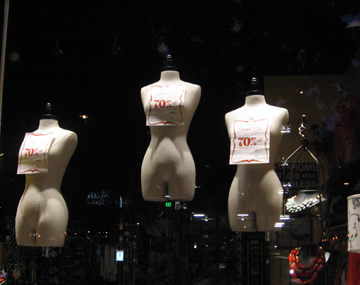
I opened a new online photo gallery, The Urban Landscape, in order to share pictures I capture as I walk through life.
You may visit the gallery by clicking HERE.
June 3, 2012
In her article in the June 1, Washington Post, Why I Watched a Snake-Handling Pastor Die for his Faith, photographer Lauren Pond wrestles with the ethics of press photographers who document life’s tragedies with pictures, all the while standing by and not taking action to intervene in the situation as it unfolds.
Pond contrasts her decision not to call paramedics to the scene as Pastor Randy “Mack” Wolford lay dying from the venom of the snake that had bitten him and the strychnine he had ingested as part of a religious ritual with the actions of Pulitzer Prize winning photographer, Kevin Carter, who was roundly criticized for photographing an emaciated Sudanese child who, under the watchful eye of a vulture standing nearby, struggling to reach a food center during a famine. Carter later committed suicide.
I highly commend Pond’s Article, in which she writes about her soul searching as she tries to come to grips with her decision.
___________________________________________
March 21, 2012
I just came across a portrait of Tilda Swinton by Fabio Lovino, reproduced below.

This picture reminds me of my own photograph which I call On the Dressing Table.

March 4, 2012
I have been shooting lately with a Zorki 4 with f1.5 50mm Jupiter 3 lens, and a Fed 2 with Industar 61 lens. Both of these are Former Soviet Union (FSU) Leica copies. They are 50 year old rangefinder cameras, however, you could not tell how old they are by looking at them, and they operate like they are new cameras.
My favorite seller of FSU cameras is the ebay seller, Synoptics Camera Store. This vendor services these old cameras before selling them so they perform as if they are brand new. And often they will sell items that look new too. The cameras are dirt cheap too — they cost about five percent or less of what one would pay for a comparable Leica, and the ones I have purchased are fine photographic machines.
I have been lamenting that the cameras with fixed lens do not fit as easily into my cargo pants pockets as I would like, so I decided to purchase a collapsible lens — that is a lens that pushes into the camera body when not in use.
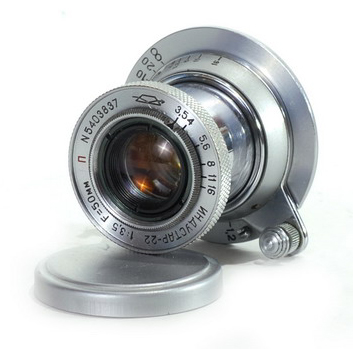
The lens I picked up from the Synoptics Camera Store last week is pictured above. Now I will just have to wait a few weeks for it to be shipped to me from Kharkov, Ukraine.
I highly recommend the Synoptics Camera Store.